ARTWORKS

CONSTRUCTED NARRATIVES REFIGURED
(2024)

Shown as three individual exhibitions

Royal Scottish Academy

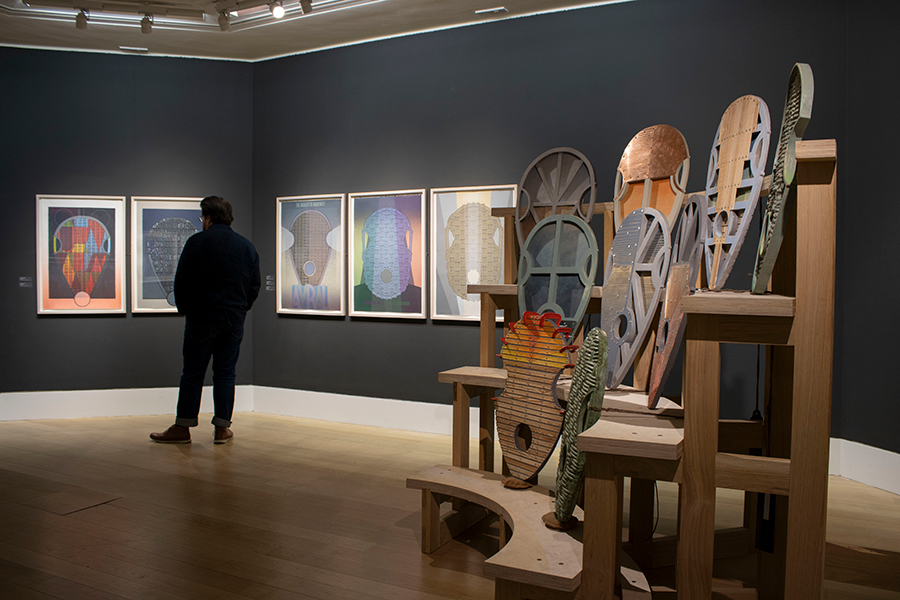
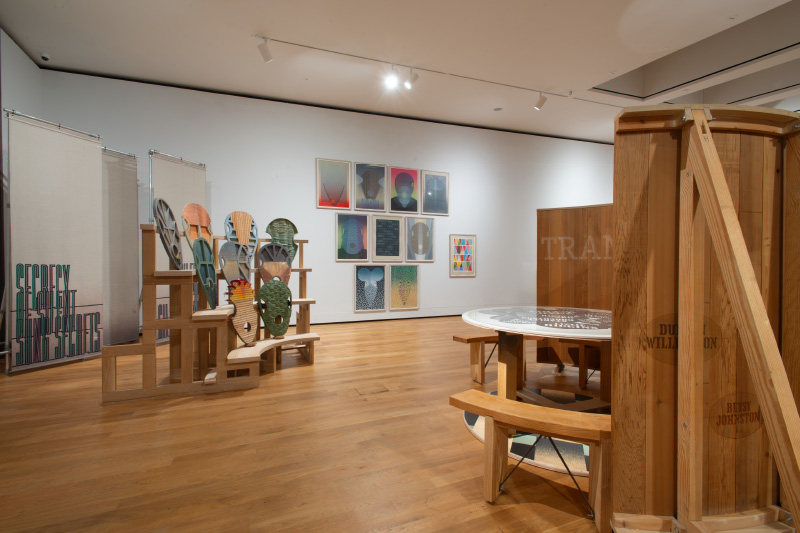
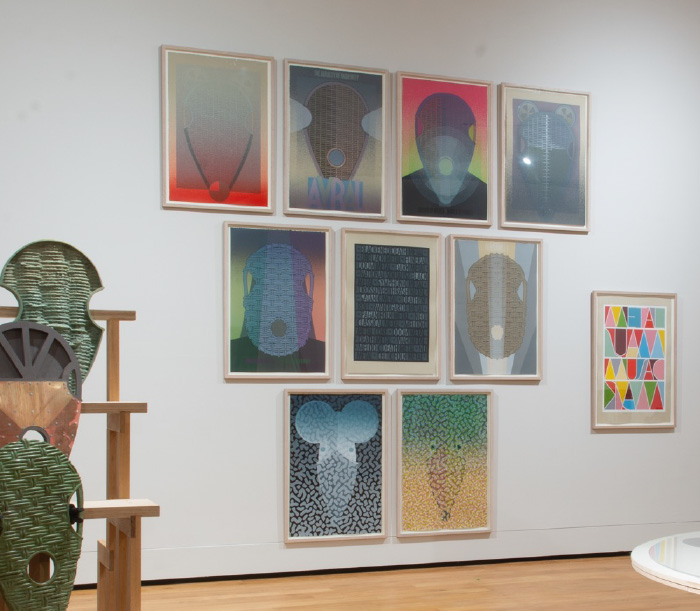
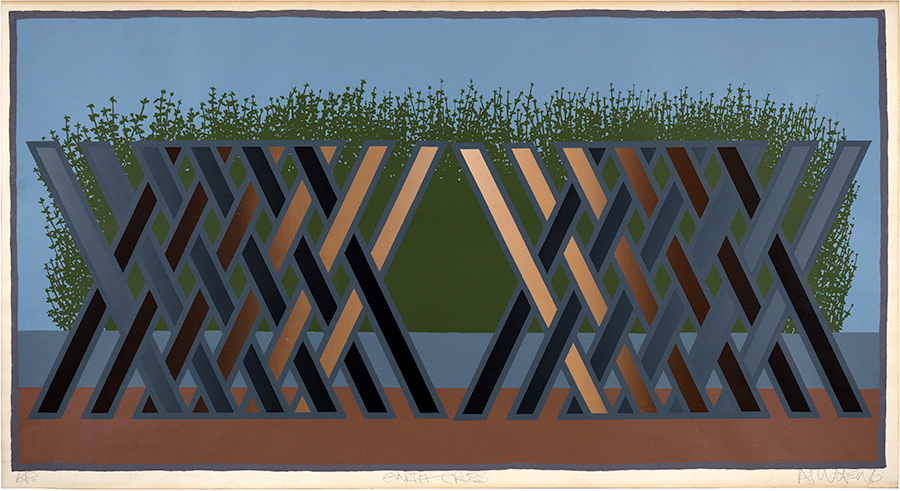
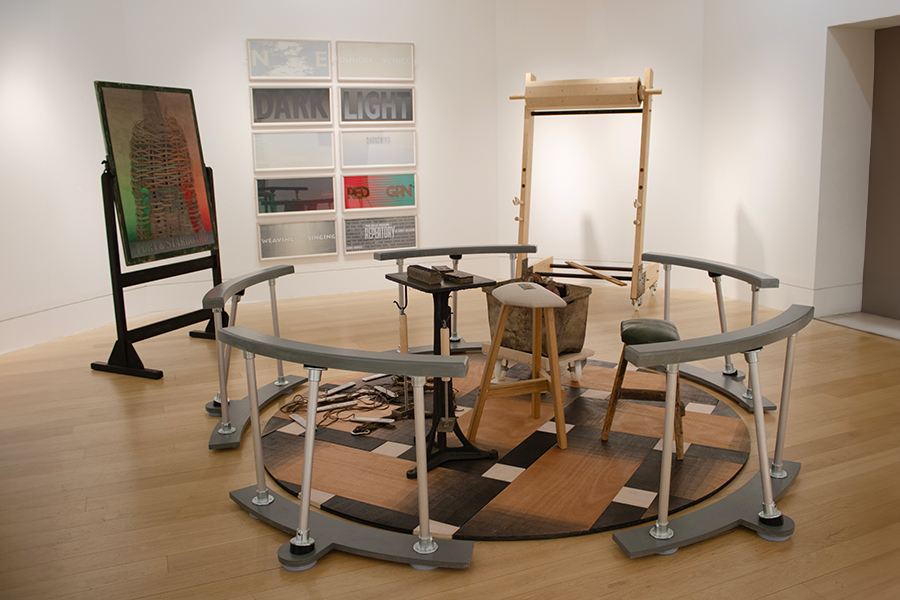
Using two octagonal galleries, one painted white the other dark grey, allowed a more dynamic install than the first iteration detailed below. Mentioning the Unmentionable and Transmission/Transmitters were not included, allowing A Year-end Drinking Coat on Woven Floor to expand into the white space. The central section is now enclosed by a series of curved balustrades whilst a new group of screenprints: Fists & Fankles, Thrums & Tangles around weaving and untangling are shown for the first time, along with two early prints of imagined woven structures.

The dark octagon shows Anon, Anon & On & On as installed in Aberdeen, again with an extended series of screenprints. Unlike the other works in both versions of Constructed Narratives the final piece looks forward although incorporating an ‘acoustic chair’ from Two Singers Working (2000). 74 Songs From 26 Singers proposes recording songs during this, my 74th year, beginning when the chair returns to the studio after the exhibition. The 26 singers were detailed in Transmission/Transmitters in Aberdeen.
CONSTRUCTED NARRATIVES

Arthur Watson, Lennox Dunbar & Ian Howard

Aberdeen Art Gallery (2003-4)

In effect three interlinked solo exhibitions with an introductory section with works from the gallery collection selected by each artist.

Included are the works detailed here:

Mentioning the Unmentionable: Behind the Curtain; Anon, Anon, & On & On ; Metal Maus Musak Mask; Transmission/Transmitters & A Year-End Drinking Coat: with Woven Floor.

Mentioning the Unmentionable: Behind the Curtain (2023)

In the exhibition, Constructed Narratives Aberdeen Art Gallery (2023-4)

Responding to A Play on the Unmentionable Joseph Kosuth counterblast to censorship by the National Endowment for the Arts in the USA. This work plays on Secret Songs of Silence, the title of a manuscript collection of North East erotica. These ‘secret songs’ remained unpublished for almost two centuries. They do not seem overly offensive given that Peter Buchan and his contemporaries did publish ballads that referenced matricide, fratricide, infanticide, incest and rape.

Photo: Mike Davidson

Anon, Anon & On & On, 2023

In the exhibition Constructed Narratives Aberdeen Art Gallery (2023-4)

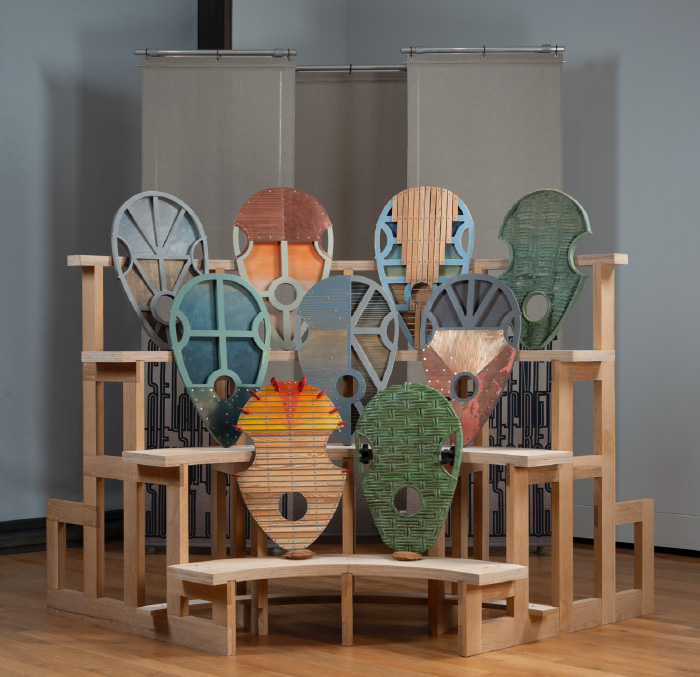
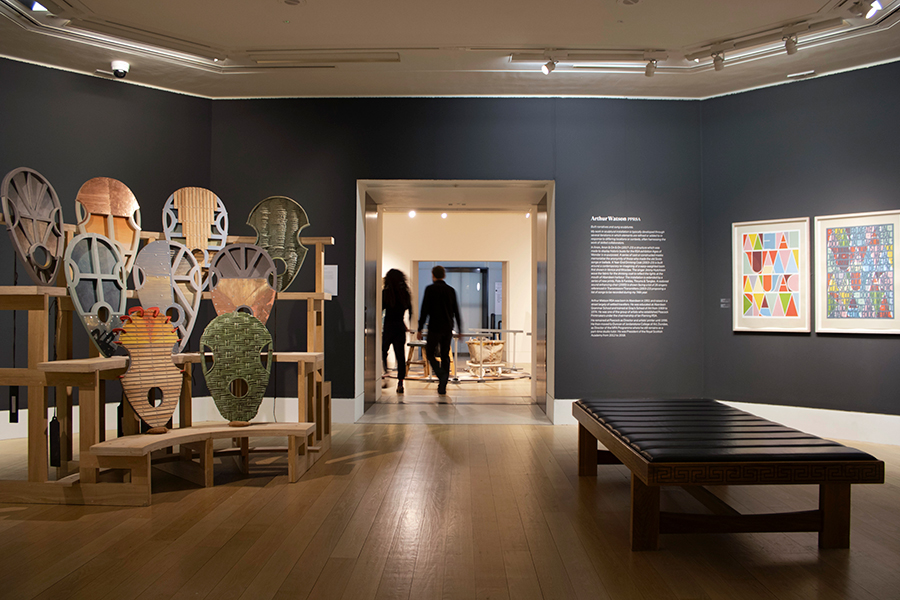
For the exhibition, Ages of Wonder, Scotland’s Art from 1540 to Now curated with Sandy Wood, I designed (and funded) a structure to display portrait busts from the collection of the Royal Scottish Academy. My idea was that at a later date I could make a series of small sculptures that could be shown on the structure. So in parallel with some of the prints also in Constructed Narratives, a series of masks began to coalesce. Rather than the great and good honoured by the academy  these would celebrate the anonymous makers of the songs and ballads that have since passed into oral tradition.

Photo: Mike Davidson

Metal Mouse Musac Mask

In the exhibition, Constructed Narratives, Aberdeen Art Gallery (2015-22)

Some time after a Dundee colleague, Mark Hunter discovered an empty portfolio in a Dundee basement, it was identified as having once contained Eduardo Paolozzi’s twelve screenprints: As Is When. It was decided to make twelve new prints – two each by six artists. My contribution was Metal Maus Musac Mask, a four word text that would become the foreword for the series, part of which was exhibited here. My second print was the first in a series of mouse heads, referencing Micky printed on the original folio. Appropriating Paolozzi’s appropriation. I continued to extend the series through a taxonomy of metal music and numerous variations of mouse masks leading eventually to a mask that paralleled the woven bronze in Anon, Anon.

Photo: Mike Davidson.

Transmission/Transmitters, 2023

In the exhibition, Constructed Narratives, Aberdeen Art Gallery (2023-4)

In the earlier work Singing for Dead Singers the process of oral transmission was demonstrated through seven recordings playing in the gallery. Here there is a more analytical approach. The names of 26 singers from whom I have absorbed songs now in my repertory – size of the singers names being indicative of the number of their songs which I have inherited.

See Transmission 2003

A Year-End Drinking Coat on Woven Floor, 2023

In the exhibition, Constructed Narratives, Aberdeen Art Gallery (2023-4)

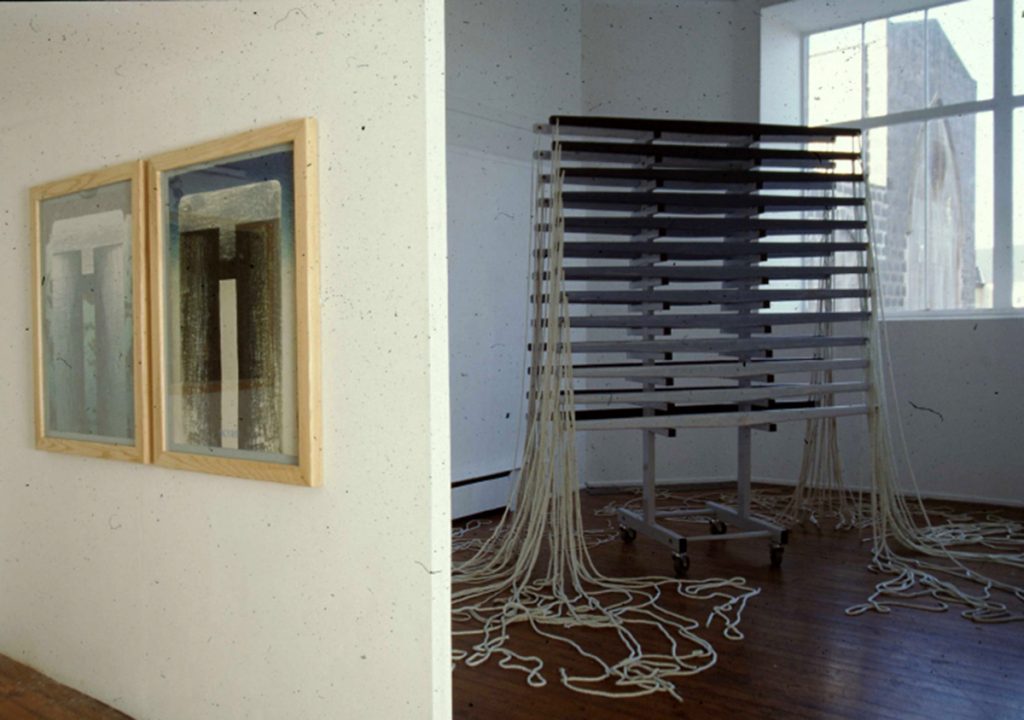
This installation is built round Towards a Year-End Drinking Coat shown in Venice in 2003. Here the coat for new year drinking has been made from yarn spun and fabric woven by Jimmy Hutchison and Erica Douglas. Its colours taken from Hogmanay night at the mouth of Aberdeen harbour. Loom weights are cast with the names of textile artists, yarns are wound onto vintage spindles, and a screenprinted jacket made in 1973 are displayed on a woven floor made from stained plywood.

Photo: Mike Davidson

Hidden Landscape: Text & Image, 2016

A series of site-specific works with Andy Rice. Commissioned by the Cairn Gorm Art Project.

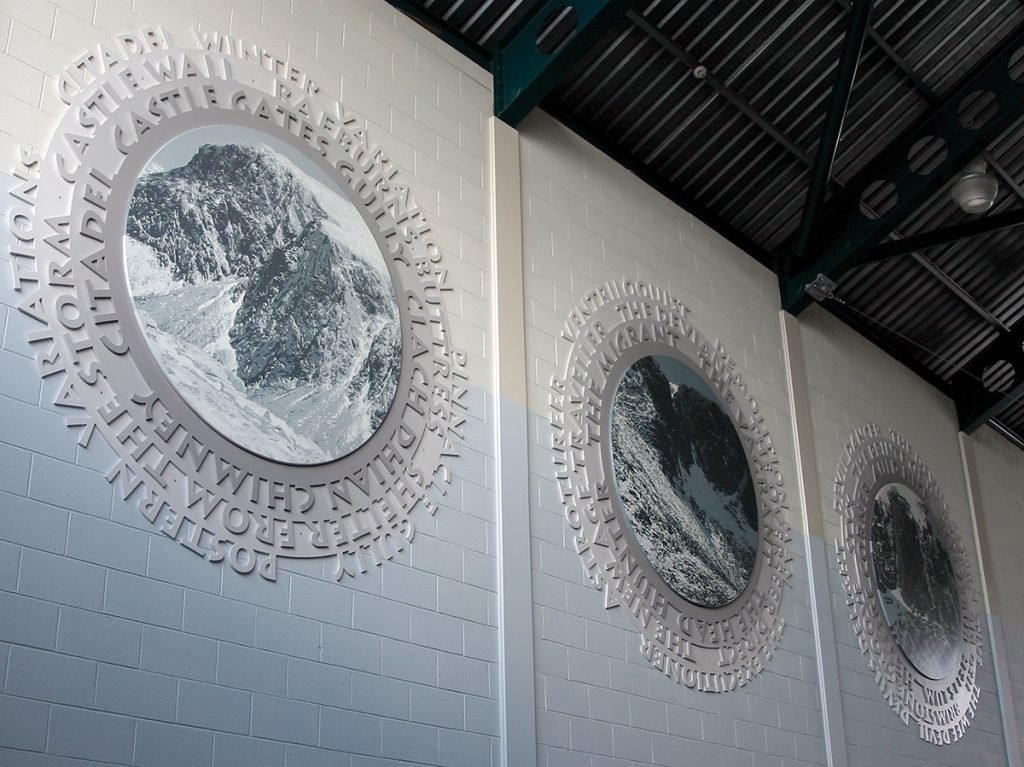
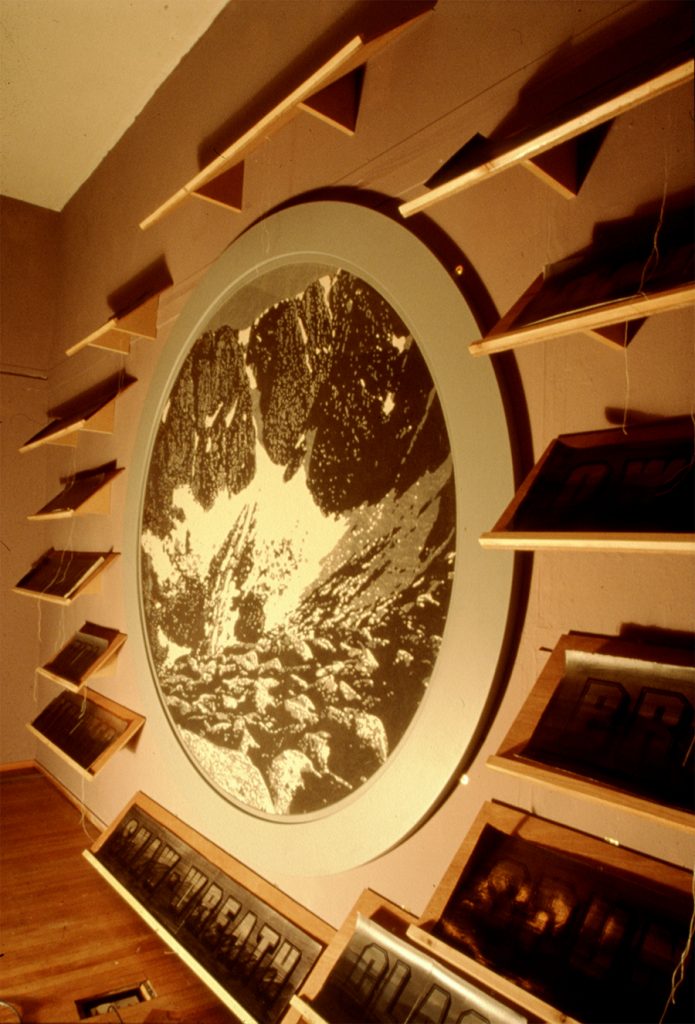
Snow Words: Hollow of the Snows is a tonal woodcut made in a temporary studio on the mountain. It is surrounded by rings of words for snow in scots, gaelic and travellers’ cant. Hidden Corries: Drawing Dangerously shows snowbound cliffs favoured by climbers, with concentric rings of text: a cumulative poetry of the ‘lines’ they have drawn on the mountain.

Photo: Andy Rice

Studio Grey Scale, (detail) 2012

A multi-part installation; one of several works invited  by James Castle and Doug Cocker for the curated selection of the Royal Scottish Academy Annual exhibition.

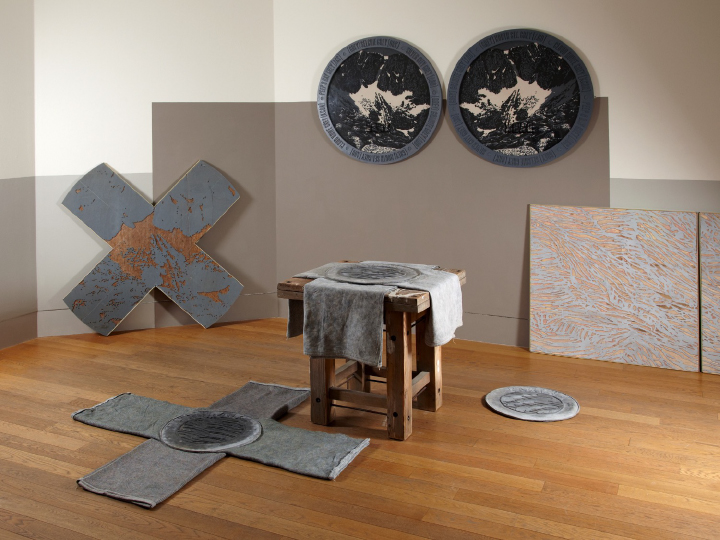
The oak table and lead casts from 6 Skies, Some Family Stereotypes and the cancelled woodblock from Memoria with new elements: two mirror-image woodcuts in circular frames and two woodblocks made from my grandfather’s drawing Near Loch Ness, (further elements – a circular floor, and table, drawing, with prints are out of shot). A further version of this work was invited by the Royal Glasgow Institute. 

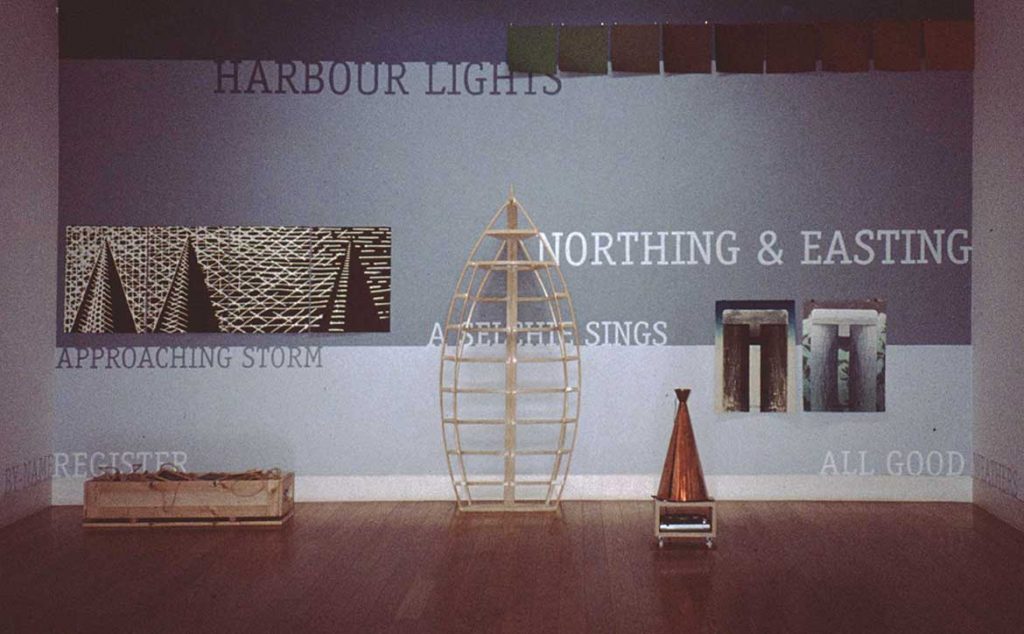
Northing & Easting, extended 2005

For the exhibition, The Sea at the Royal Scottish Academy, curated by Bill Scott and Colin Greenslade

The original boat frame and speaking trumpet (here entitled A Selchie Sings) are included. Further works are: Approaching Storm, 4 chainsawed woodcuts; By Name Register, 50 alternative names for north east fishers, rubber-stamped on small blackboards within a felt-lined crate; Harbour Lights, nine screenprints reflecting the lights which define the entrance to Aberdeen Harbour; and two screenprints from the series All Good Weathers.

Photo: Andy Rice

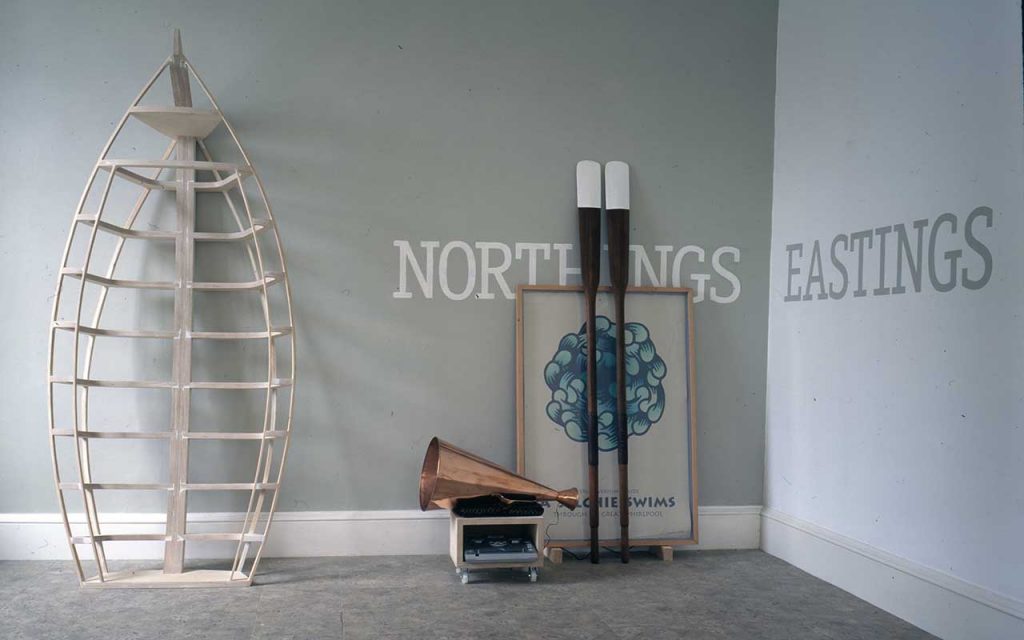
Northing & Easting, 2005

In the exhibition, True North at the Weem Gallery for the Pittenweem Arts Festival

Assembled for an exhibition of work by artists from the North Sea rim. Centred on a constructed small boat frame it was an early essay in multi-part installation: a pair of found oars, a woodcut with screen printed text and a copper speaking trumpet with recorded soundtrack.

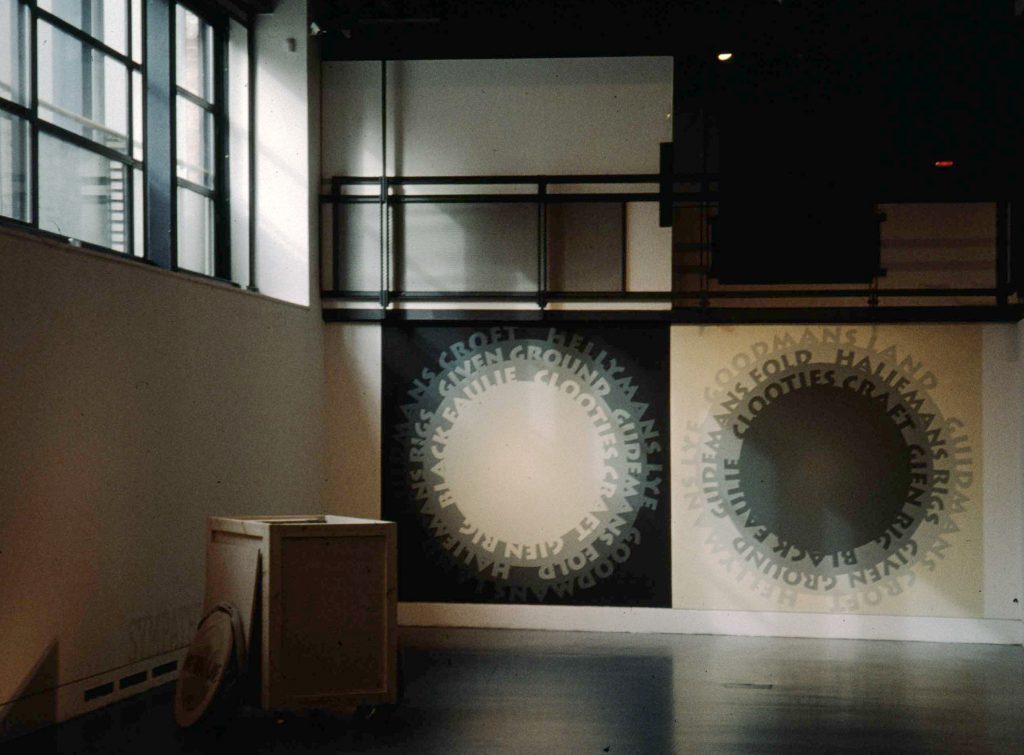
Lands: For a Goodman, 2005

The Visual Research Centre, University of Dundee
From an exhibition with Doug Cocker

Bringing together some works from our exhibition Leaving Jericho at the John David Mooney Foundation, with new work in response to Richard Murphy’s double-height space in the DCA building. In Chicago a series of printed discs with images of goodman’s lands (ground left uncultivated for the devil): here dialect words for these lands are painted directly on the wall. As tonal opposites, one showed the light of Christianity emerging from pagan darkness, the other, the persistence of the old religion in the face of Protestant dogma.

Photo: Arthur Watson

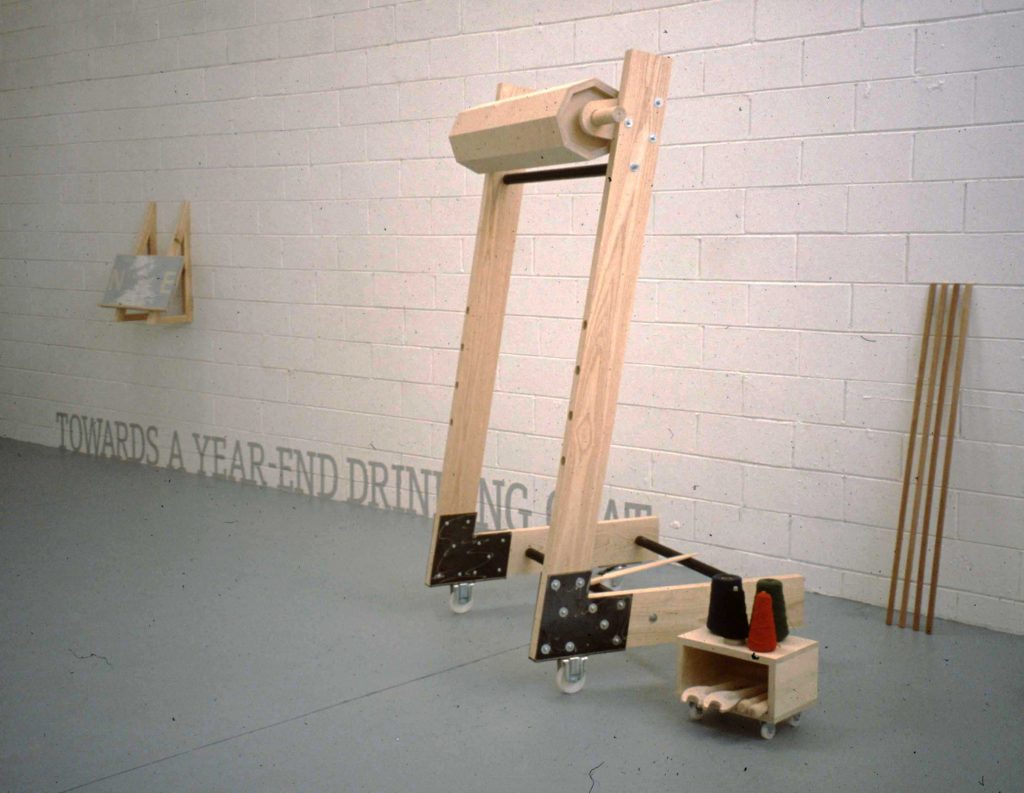
Towards a Year-End Drinking Coat, 2003

Venice and Wroclaw.

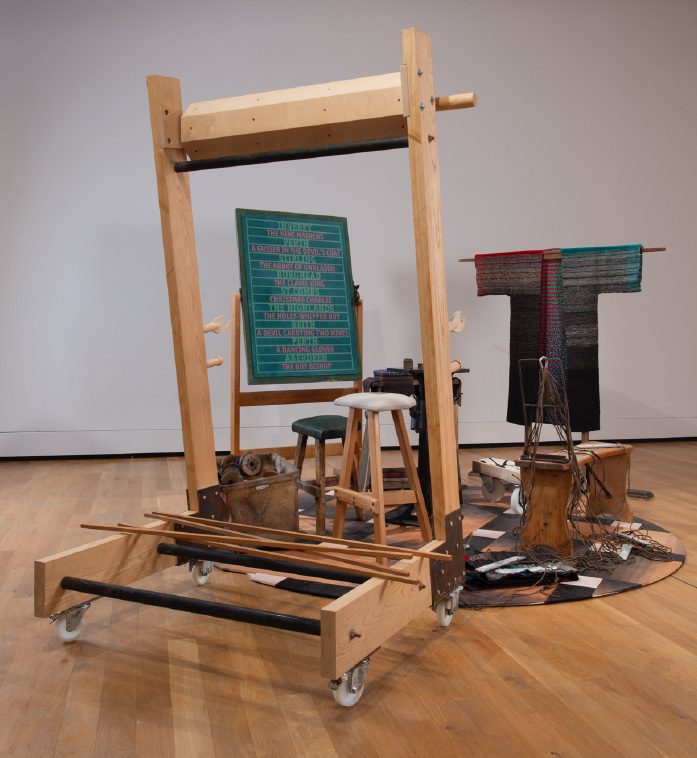
Curated by artist Sonia Rolak, the exhibition explored intersections between fine art, design and craft. My installation centred on a contemporary re-imagining of a wrap-weighted weaving loom. This was shown along with a series of screenprinted book pages which suggested links between singing and weaving, and between North East Italy and North East Scotland.

Photo: Arthur Watson.

LEAVING JERICHO

Arthur Watson & Doug Cocker (2003)

Planned as two related exhibitions at the Stanley Picker Gallery, Kingston University & the John David Mooney Foundation, Chicago. Due to a budget overspend in previous year Kingston were forced to cancel.

Memoria Extended and Whispered Voices were made but not exhibited whilst the first iteration of Sympathy for the Devil & Transmission were shown in Chicago.

Transmission

With Speaking in Tongues (2003) by Doug Cocker
Prior to the exhibition, Leaving Jericho, The John David Mooney Foundation, Chicago

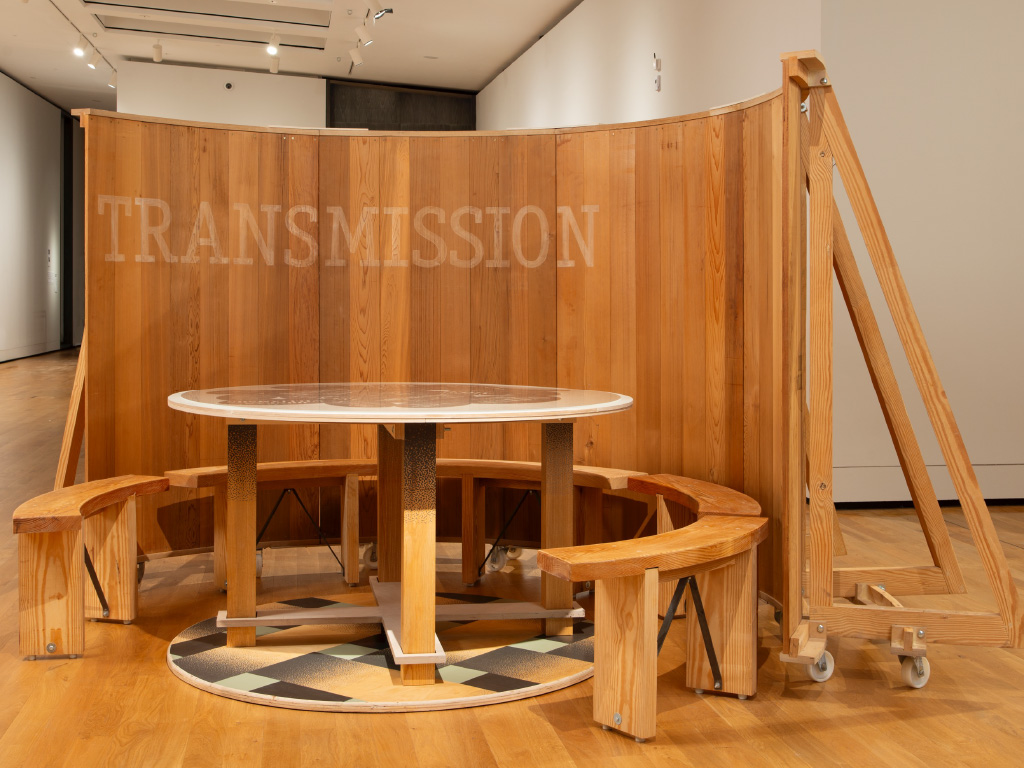
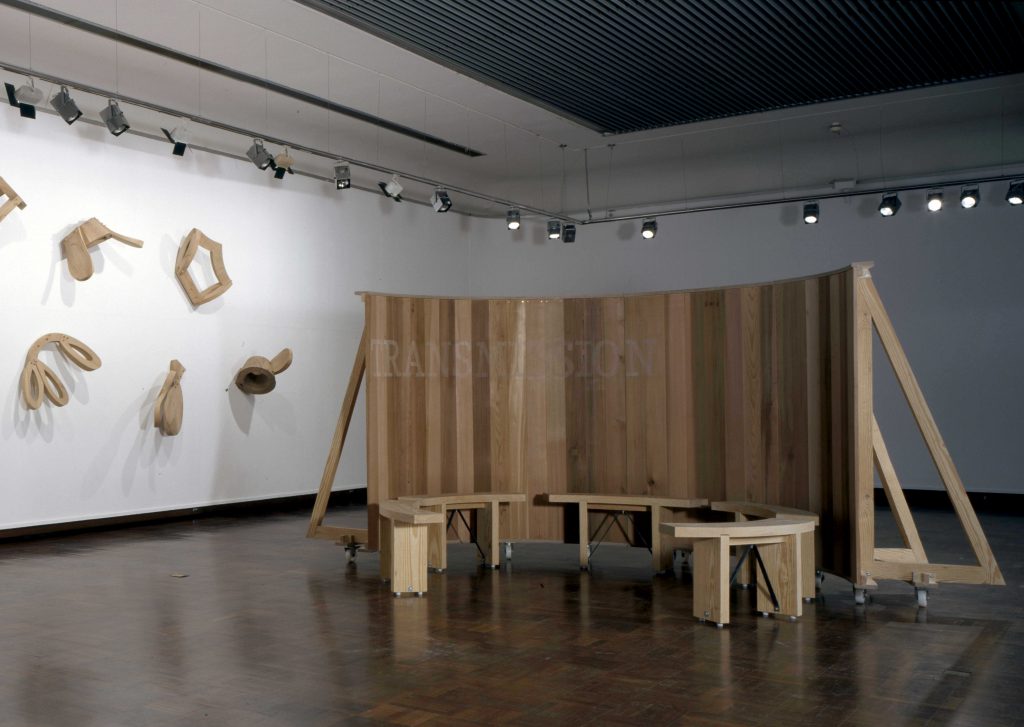
A structure for the intimate exchange of songs – a platform for the non-platform singer. The curved screen enhances the voice whilst shielding the singers from outside distraction. Unlike earlier constructions which relied on ‘found timber’ the materials here were selected from the palette of American sculptor Martin Puryear. The use of birch ply acknowledges the influence of Finnish modernist architect, Alvar Aalto.

Photo: Colin Roscoe

Sympathy for the Devil, 2003

In Leaving Jericho with Doug Cocker, here installed at the Royal Scottish Academy (2011)
John David Mooney Foundation, Chicago

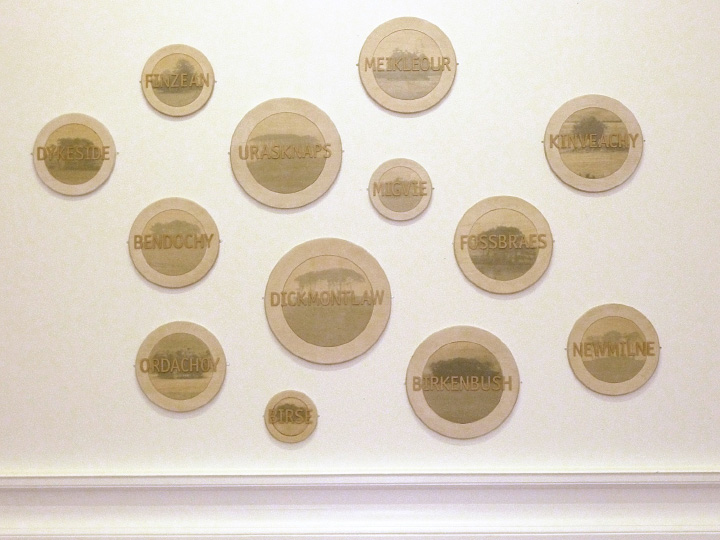
In his Letters on Demonology and Witchcraft, Sir Walter Scott wrote in 1830, ‘In many parishes of Scotland there was suffered to exist a certain portion of land called ‘the goodman’s ground’ which was never ploughed or cultivated but suffered to remain waste, like the temenos of a pagan temple’. This ground was set apart for the devil to ensure the wellbeing of the rest of the farm, its crops and livestock. Scott believed that this practice died out in his lifetime, but this work suggests the possibility that stands of trees within cultivated fields in North East Scotland may be the remains of ground dedicated to ‘the laird o the black airt’

Photo: Arthur Watson

Whispered Voices, 2003

The exhibition Leaving Jericho was planned to be shown in two parts in Chicago and Kingston University, which was cancelled due to temporary closure.

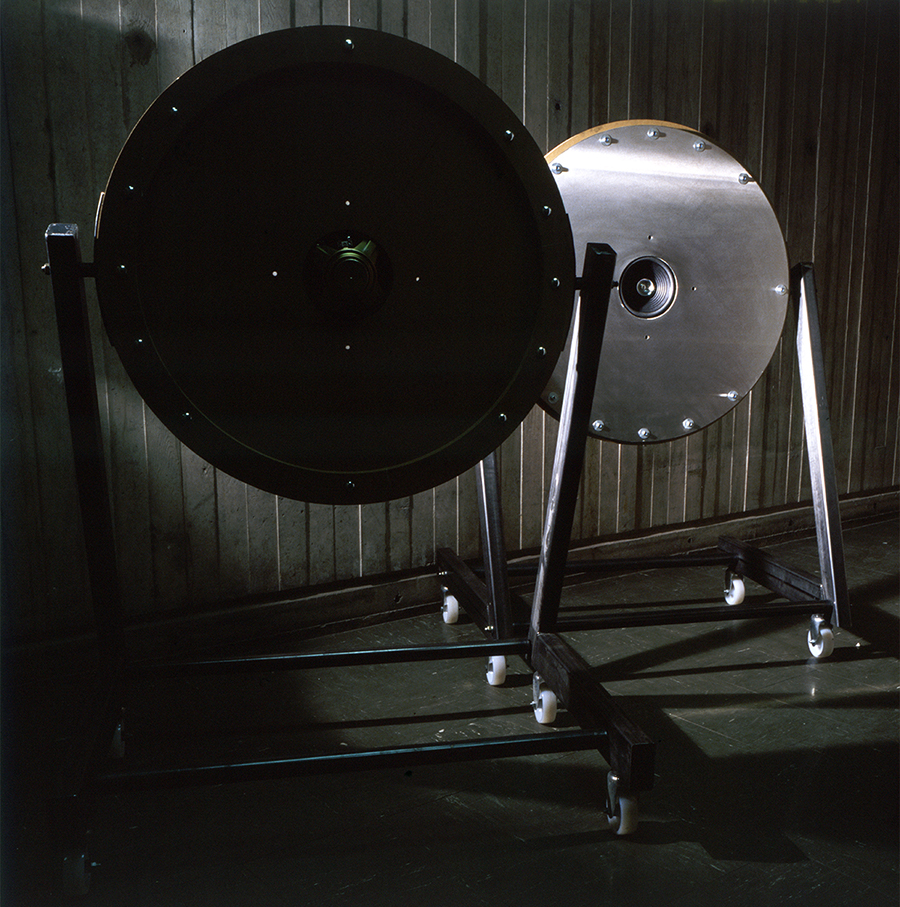
Elements from the Hermitage, a managed landscape on the banks of the Braan outside Dunkeld, are paraphrased here. The original building (1758) was glazed in red and green, overlooking the Black Linn Falls and transforming them into a ‘Cataract of Fire, a Cascade of Liquid Verdigrease’. The folly was refigured in the late 18th century and dedicated to the blind bard Ossian, celebrated by James Macpherson in his Fragments of Ancient Poetry, collected in the Highlands of Scotland and translated from the Gaelic or Erse Language. The sound of the falls was magnified by the structure of the building and their image extended by distorting mirrors. These features were present in the planned installation – mirrors with speakers, red and green filters and a screen- printed image of the falls.

Photo: Colin Roscoe

SINGING FOR DEAD SINGERS

5 related exhibitions across 5 venues in Aberdeen (2000):

Aberdeen Art Gallery, Aberdeen Maritime Museum, Aberdeen Central Library, Peacock Visual Arts & Grampian Hospitals Art Trust.

Included are the works detailed here:

Singing for Dead Singers; Sweeping Through(the Gates of New Jerusalem); a History of Scottish Performance; Memoria; Two Seas & Fourth State.

Singing for Dead Singers, 2000

In the eponymous exhibition at Aberdeen Art Gallery and in 4 further venues across the city.

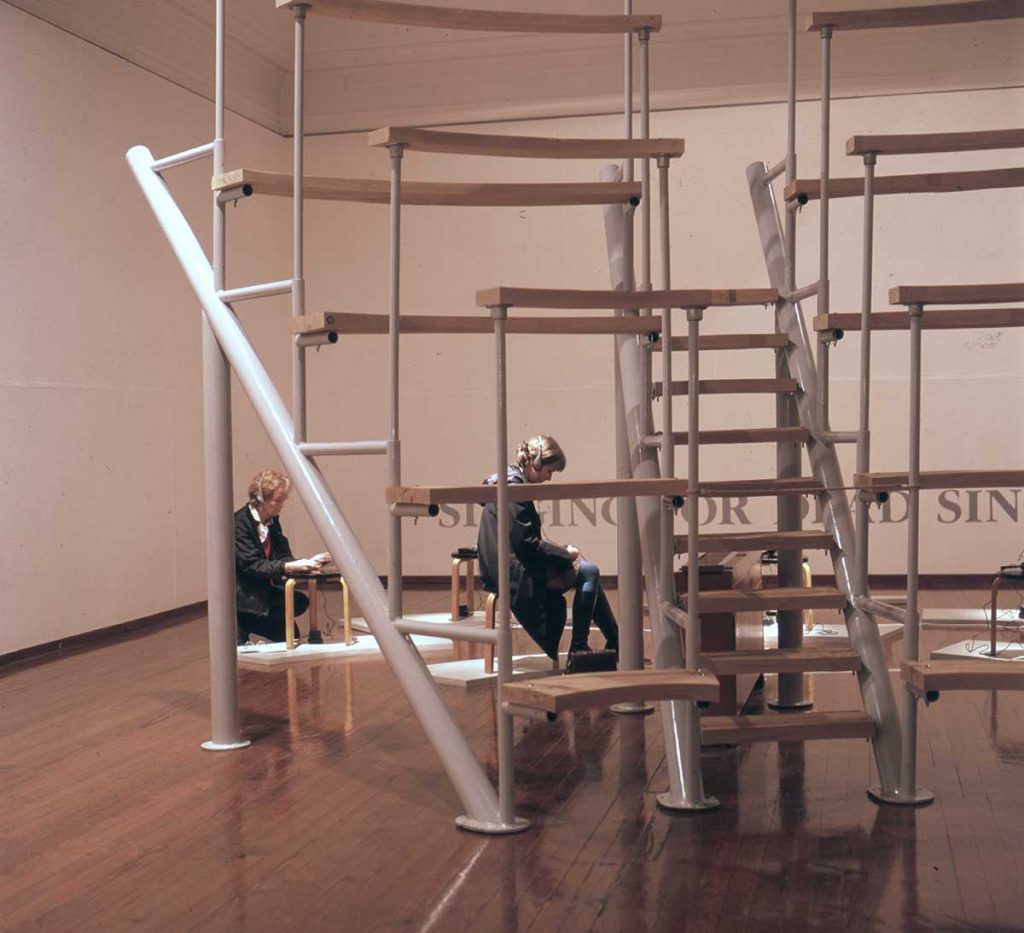
The structure, part anatomical lecture theatre, part auditorium, was rendered useless by removing the floor sections, these formalities having little meaning in the practice of the traditional singer. The essence of the work was 7 CD-Walkmans on constant play, each with a recording by a living singer of a song learned from one who had subsequently died.

Photo: Stuart Johnstone

Sweeping Through (the Gates of New Jerusalem), 2000

Exhibited, Aberdeen Art Gallery, part of the 5 venue exhibition, Singing for Dead Singers

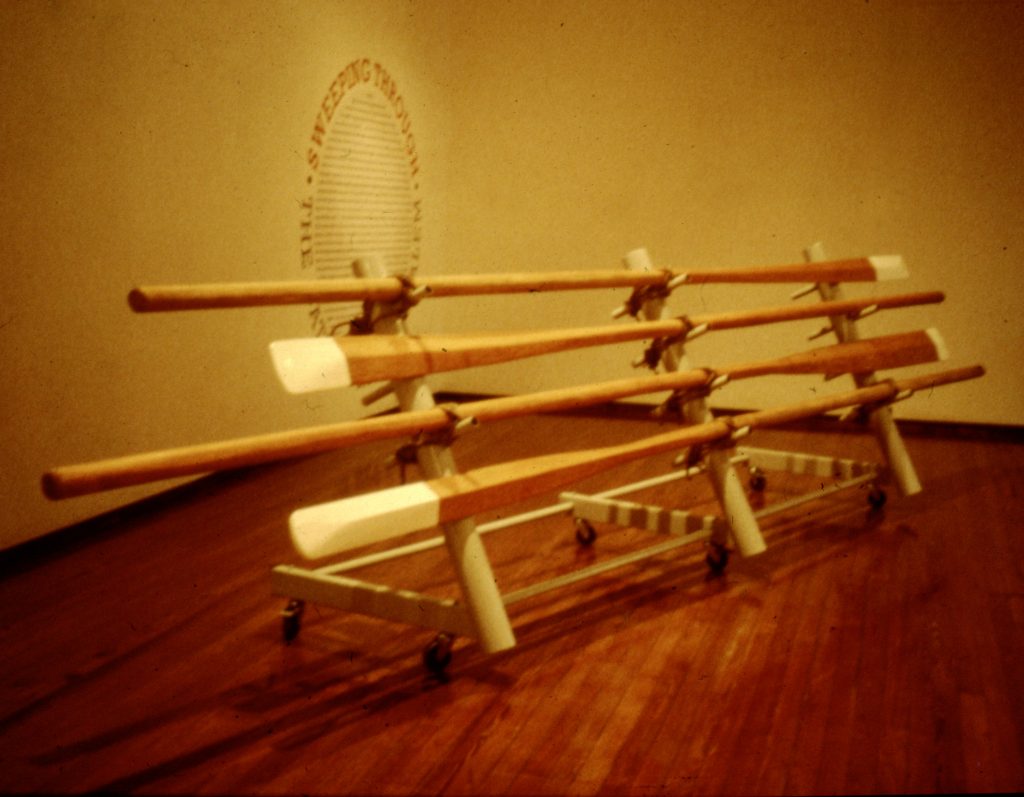
First exhibited in Sculpture, a Cathedral and an Abbey, a survey of British sculpture curated by James Castle at Gloucester Cathedral. The first work made in a new studio; carving these oars from massive boards, using a shipwright’s draw-knife and spokeshave, was an intensely satisfying experience. An amalgam of the physical and the spiritual, the piece was made in response to the short story It Must be the Angels Singin by the late Peter Buchan, the Peterhead fisherman-poet.

Photo: Stuart Johnstone

A History of Scottish Performance, 2000

Aberdeen Maritime Museum within the 5-venue exhibition, Singing for Dead Singers.

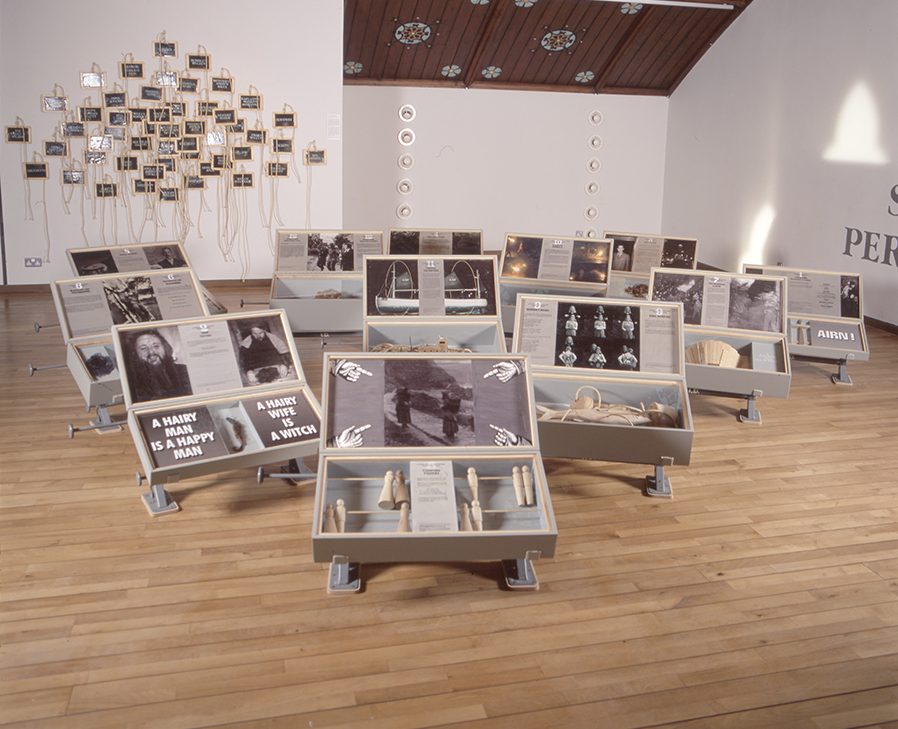
Building on an earlier sketch made for the exhibition, Grey (1998) in Leyden, this installation referenced the rituals, calendar customs and superstitions of North East fisher communities. The work interrogated this aspect of traditional life through the conventions of performance art, its documentation and residual artefacts, alongside imagined reconstructions both physical and performative. This established a practice of utilising multiple collaborators in the same way that I had been engaged by so many whilst working as an artists’ printer.

Photo: Stuart Johnstone

Memoria, 2000

Exhibited, Peacock Visual Arts as part of the 5 venue exhibition Singing for Dead Singers

An early interest in the annotated watercolours of Edward Lear prompted the development of this work where a quintessentially North East landscape is both visual and textual.

Memoria has grown under the influence of three inspirational pairings: historical works by Lear and Lord Byron, close working relationships with art historian/artist, Alan Woods, and singer/photographer/folklorist, Peter Hall both recently dead and a current collaboration with artist/writer, Kevin Henderson, and artist/printer, Michael Waight. The circular image was printed from two woodblocks cut with an electric router, only one print was made on cambric before the blocks were cancelled.

Two Seas, Fourth State, 2000

Exhibited, Peacock Visual Arts, part of the 5 venue exhibition, Singing for Dead Singers.

Fourth in a series of variations made from elements of the 1990 installation Across the Sea from the exhibition, Three Scottish Sculptors at the Venice Biennale. Each variation is identified, like stages in the development of an etching, as a ‘state’. The second showed the 26 printed jackets archived in a cabinet, while in the third state the spars that had held the jackets were reshaped and painted, then displayed on a steel rack. In the fourth state, shown here, the painted spars were further refined with washes of acrylic, oil paint and wax. Mixed guy ropes were added. These re-workings have shifted the piece from an Italian sunset to a North Sea winter.

Photo: Stuart Johntsone

6 Skies: Some Family Stereotypes, 1997

Exhibited, Scottish Sculpture Open 9, Kildrummy Castle

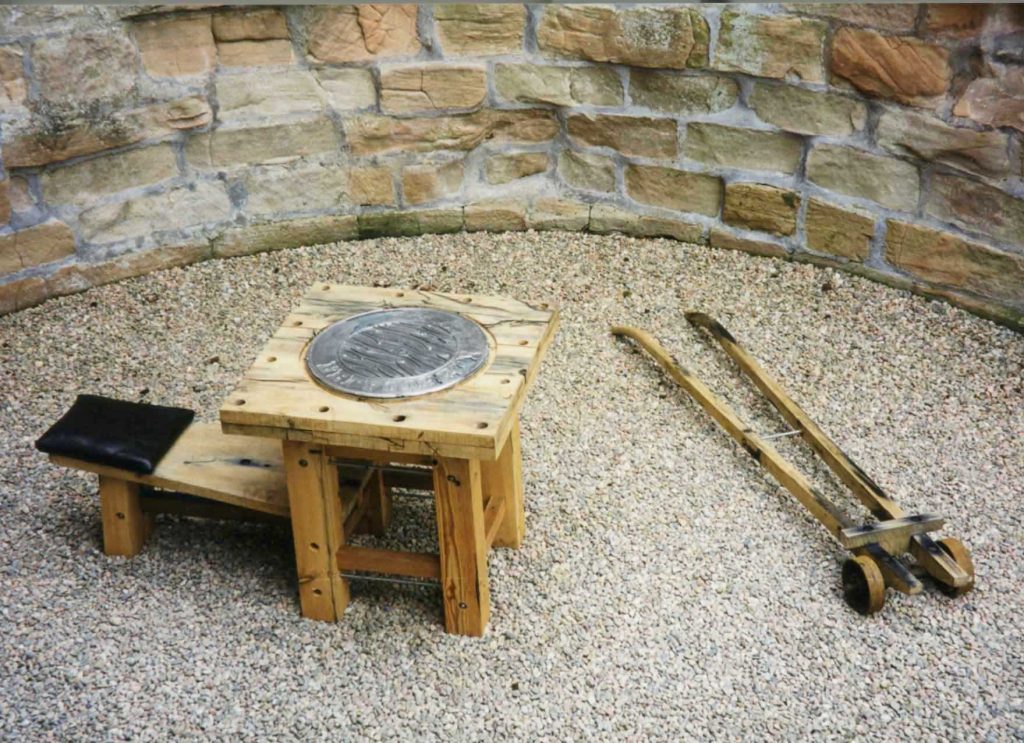
This work bench for an imagined artisan was conceived to carry out the manufacture of cast printing blocks – stereotypes – in the Upper Donside landscape. The blocks then cast in typemetal showed formalised skies with mirror-image place names. These blocks were then, themselves, cast in paper pulp.

Photo: Arthur Watson

By Sea & Shore, Cancellation Proof, 1996

Exhibited, Royal Scottish Academy

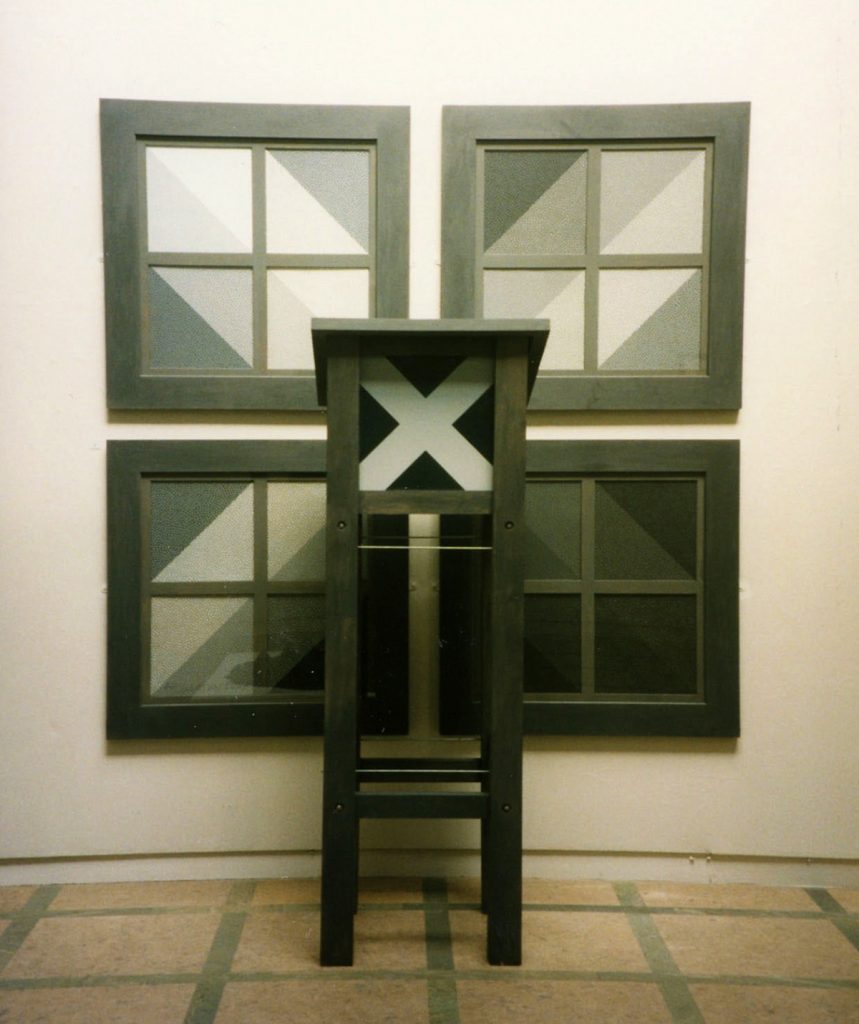
A sequence of prints based on a geometric arrangement of navigation signs,-lifebelts and fences at the edge of the sea at Fittie was cancelled to form a large tonal cross of Ben-day dot patterns. The printmakers’ device of scoring the plate to prevent further prints being produced is used here to conceptually refigure the work from its original form into an abstraction of the already abstracted image which is still present, but invisible under its veils of grey. The Fittie sequence was cancelled in four versions of the grey cross, each produced by a different series of overprints.

Photo: Arthur Watson

Sea Sign/Sky Sign, 1996

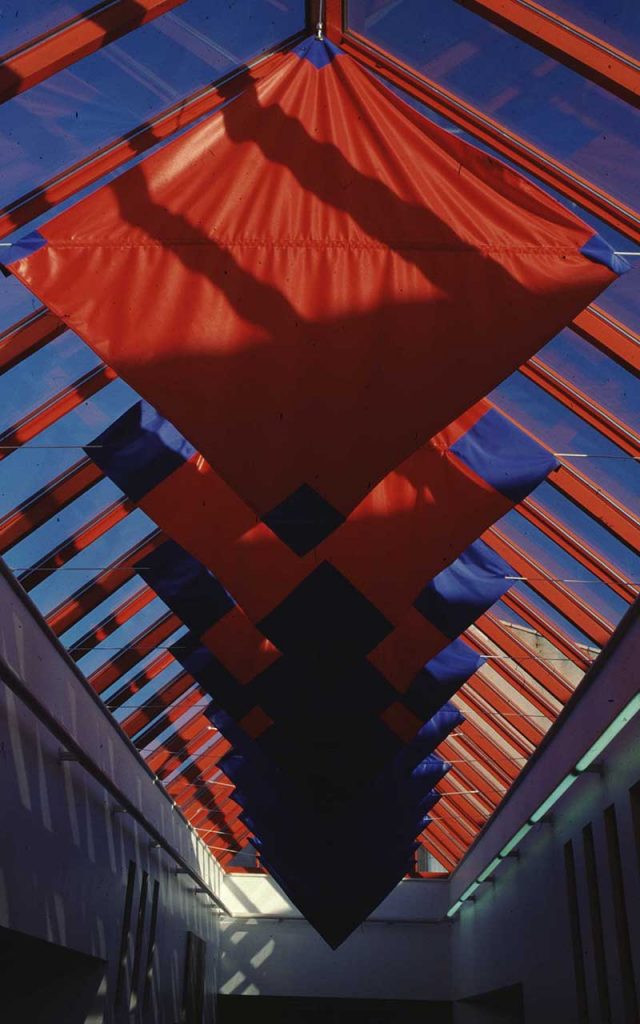
A series of banners commissioned by Grampian Hospitals Art Trust

When living in the harbour area of Aberdeen there were several geometric navigation signs and, when the Tall Ships Race visited, an opportunity to study their signal flags. These flashes of colour amongst the prevalent greys of the city prompted many works under the generic groupings – Harbour Geometries or A Font of Flags.

Photo: Andy Dewar

Across the Sea, 1990

In the exhibition, Three Scottish Sculptors at the 44th Venice Biennale (David Mach, Arthur Watson & Kate Whiteford).

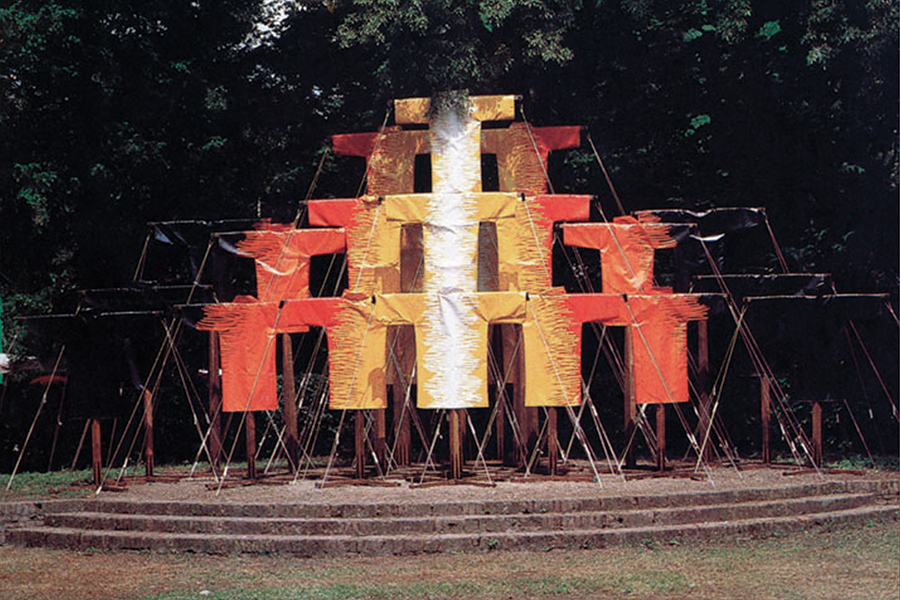
Unlike subsequent Scottish exhibitions at the Biennale Three Scottish Sculptors was presented on the Esedra at the centre of the Giardini. This unique site prompted a collaborative approach from all three artists, each through a site-specific solution. Across The Sea started with a reference to Turner’s sunsets on the Grand Canal, but took its form from the sunset of the fishing industry in north east Scotland. In common with several of my larger works, Across the Sea has been refigured through several iterations – but none on the scale of the original.

Photo: Sean Hudson

Burning Your Boats, 1988

Collegium Artisticum, Sarajevo
New Tendencies in Scottish Art

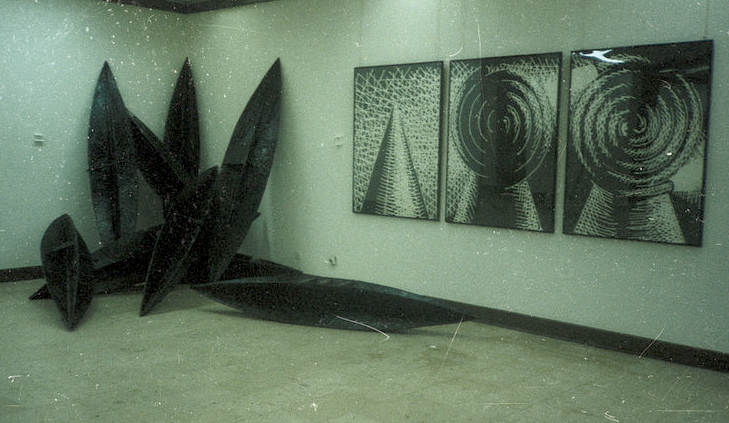
Shown here with three chainsawed woodcuts, nine sleeker pods were made in the gallery and tarred on a Sarajevo building site on the opening day of Richard Demarco’s exhibition, New Tendencies in Scottish Art. Other ‘Scottish’ artists included the Romanian sculptor Paul Neagu with Merlyn Smith, George Wyllie, Ainslie Yule, Glen Onwin, David Mach, Moria Innes and Doug Cocker.

Photo: Richard Demarco, Demarco Digital Archive.

Seasign Stromness, 1987

In the exhibition ‘Four sculptures on the Pier, Pier Arts Centre, with Fred Bushe, Doug Cocker & Frank Pottinger

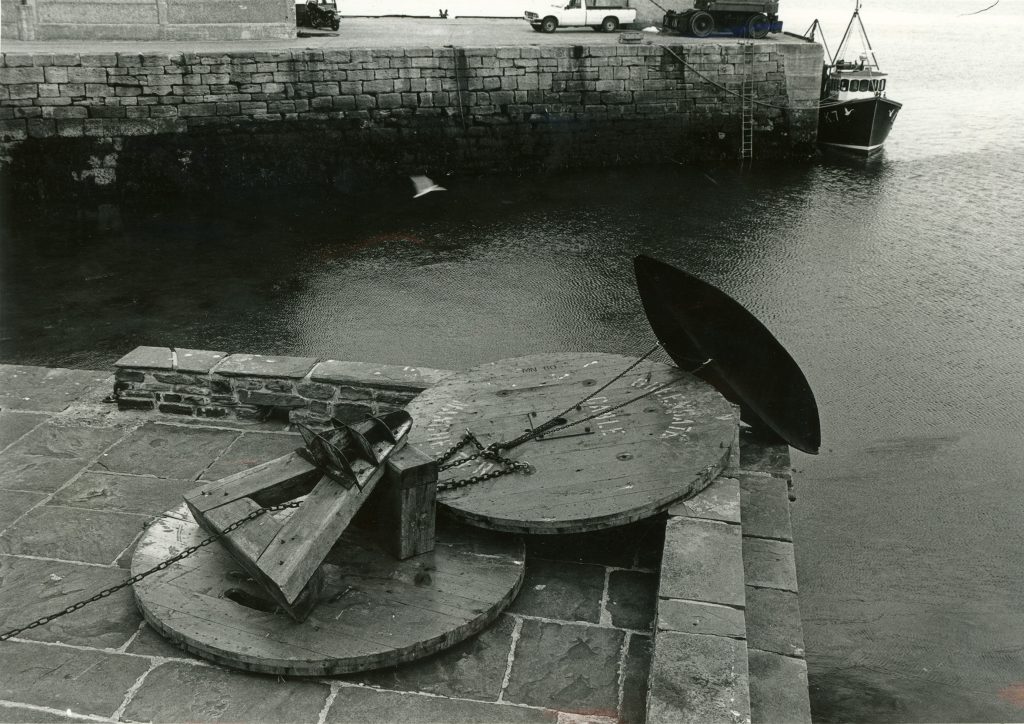
The ‘boat pod’ form had first appeared poised to enter Stromness harbour, chained through a seasign sculpture (1985). Nine sleeker pods were tarred on a Sarajevo building site on the opening day of Richard Demarco’s exhibition New Tendencies in Scottish Art. For the 40th anniversary exhibition of the Pier Arts Centre, the pod was of welded steel plate with a new sign and intertwined bronze transposed from the Iolaire Memorial on the Isle of Lewis.

Seasign Long Pointer, 1980

Exhibited in Scottish Sculpture Open One at Kildrummy Castle, initiated by Fred Bushe & the Scottish Sculpture Workshop.

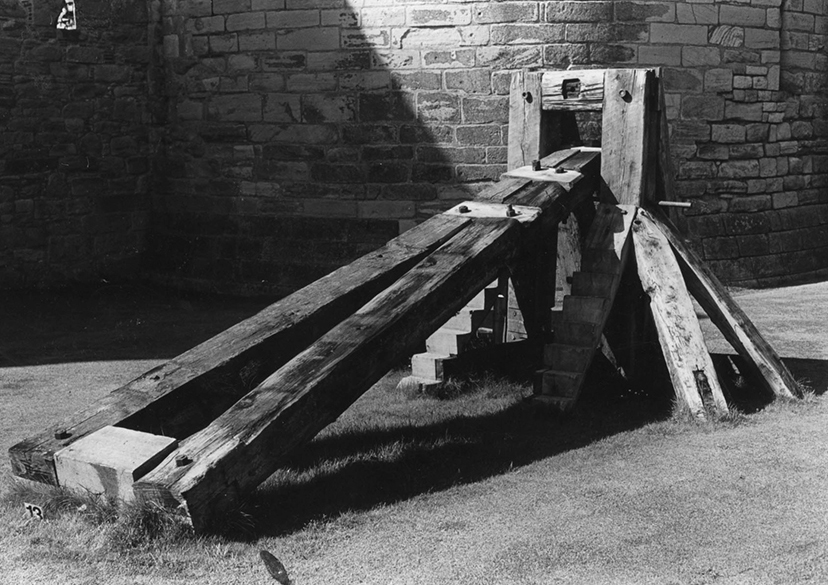
In 1979 I moved, with the painter Joyce Cairns, to the former fishing village of Fittie bounded to the east by the sea, to the south by the mouth of the River Dee, and west by the harbour. For each of us this slowly permeated every aspect of our work as artists. For me this was reinforced by the dawning of the Scottish Sculpture Workshop which, for the first time, allowed me to work on a large scale, developing a vocabulary of basic structures to which I constantly return. These include a geometry of navigation signs that surrounded us or the canoe-like pod as a boat metaphor.

Ten Artists from North East Scotland, 1979

Aberdeen Art Gallery and Bergens Kunstforening with Barbara Balmer, Gordon Bryce, Fred Bushe, Alexander Fraser, William Littlejohn, Ian McKenzie Smith, Fred Stiven, Colin Thoms & Frances Walker.

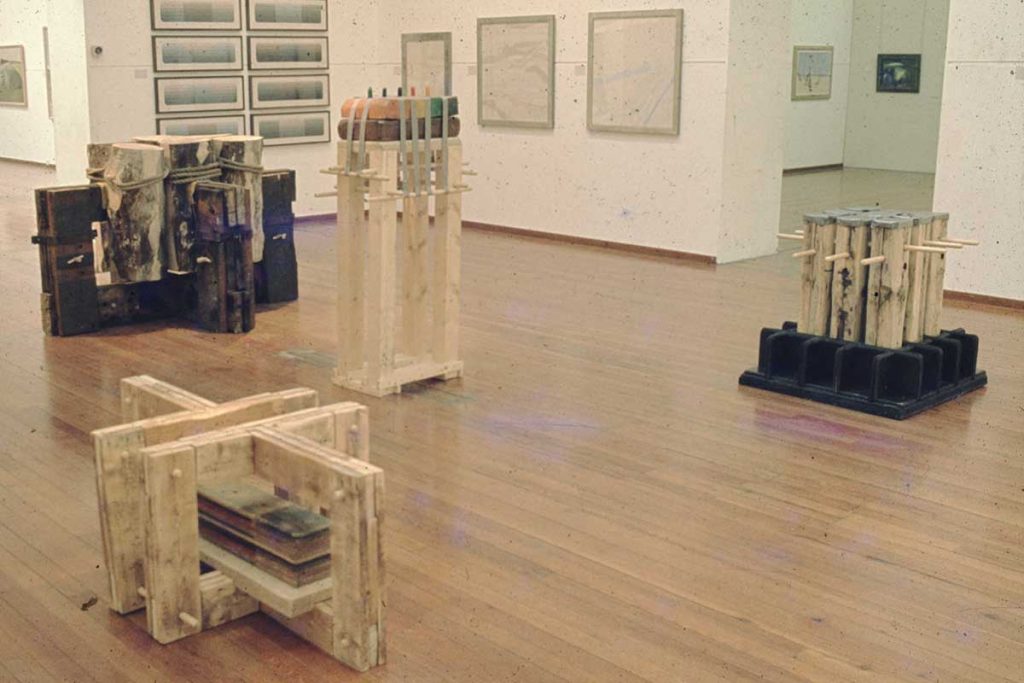
This was a key exhibition for me as a young artist, not because it separated me from my peer group, or that it would tour abroad, but rather it gave me, for the first time, the opportunity to show a group of freestanding sculptures. During the year of the exhibition my visual vocabulary grew, as did my attitude to materiality. From the relative precision of Rainbow Table a growing reliance on ‘found timber’ as seen through Squeezed Table to Table for Fingal.

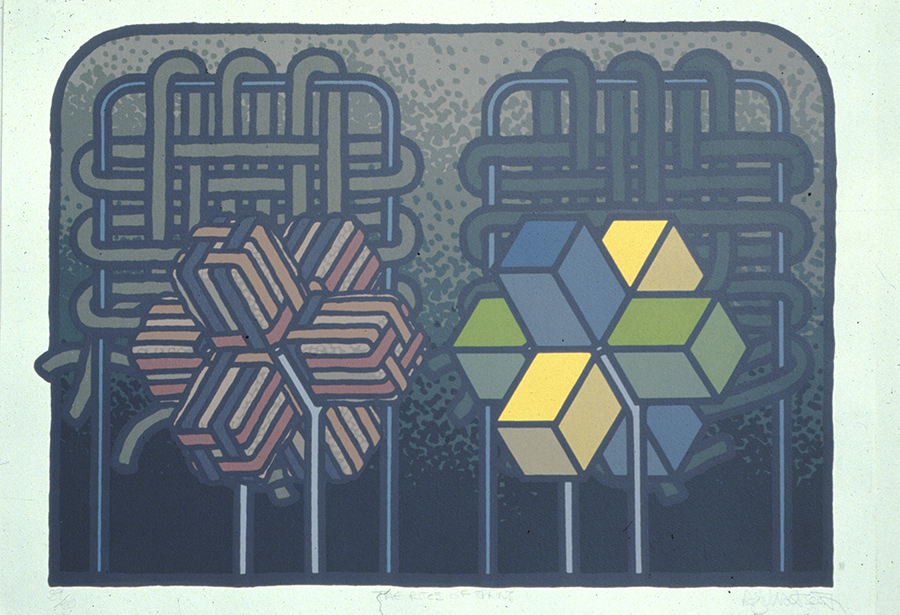
The Rites of Spring, 1976

An exhibition at Peacock Printshop of printed variations with Alan Cowie.

The Scottish Arts Council invited the four Scottish print workshops (Edinburgh, Glasgow, Aberdeen and Montrose) to each select two artists to produce an edition on a common theme and format. My Rites of Spring print was made in parallel with my earliest sculptural works. These were wrapped in layers of canvas stacked, strapped or tied, allowing them to be displayed either parcelled up or fully open and spread across the gallery floor.

Recent Prints, 1976

The Printmakers Workshop, Edinburgh

Tonal Cross, shown here was one of five related screen prints, developed from a sequence of six small prints exhibited in 3 Print Workshops at the Scottish Arts Council Fruitmarket Gallery. These works imagined sculptures before sculpture became my main focus. More recently large wood blocks have been exhibited as sculptural objects whilst different iterations of an installation have like prints, been categorised as ‘states’.